


What is a CDN? What is the purpose of a CDN? What are the drawbacks of a CDN? This article explains what a CDN is, how a CDN is structured, how it works, and its pros and cons. We also provide 3 Taiwanese CDN case studies. If your business needs CDN services, feel free to contact SkyCloud!
1. What is a CDN (Content Delivery Network)?
CDN (Content Delivery Network) is a network technology where the main server copies website content to multiple cache servers. It reduces network latency and provides faster, more stable connections.
CDNs are suitable for any website or app that needs to deliver large amounts of content quickly, such as news websites, video platforms, e-commerce, gaming, and live streaming services. These platforms usually have a lot of static content like images, text, videos, and music files. Businesses with data-heavy websites or apps can use a CDN to improve performance, availability, and security.
Want to know which industries benefit from CDNs or how CDNs can help your business? Click the link below to contact SkyCloud and we will arrange a dedicated expert to assist you.
2. Understanding CDN Structure and How It Works
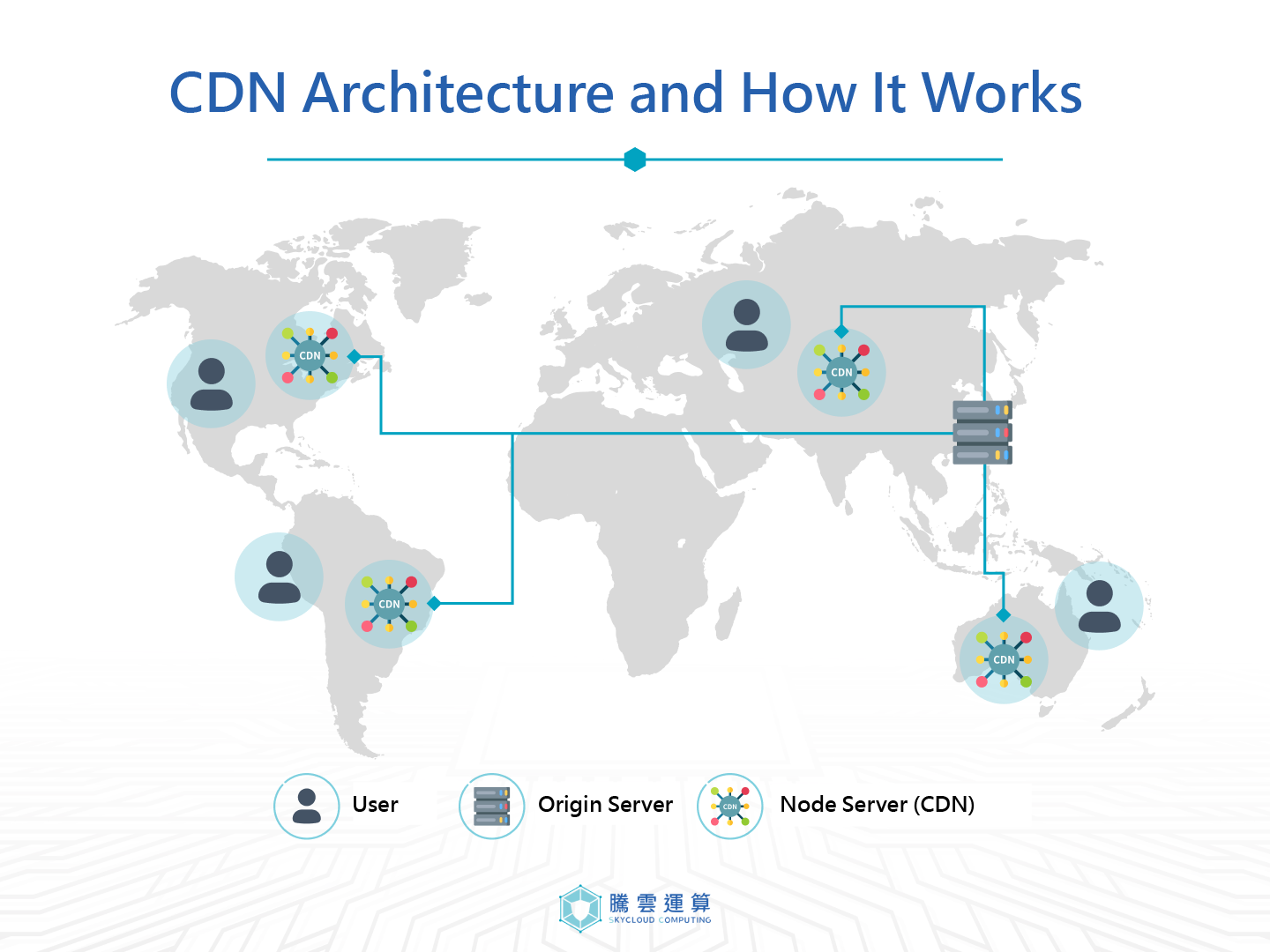
CDNs work by caching data from the origin server at multiple nodes worldwide. When a user requests content from the origin server, the CDN automatically redirects the request to the nearest node for faster response.
For example, a CDN is like a head office with warehouses around the world. If a customer in location A places an order, the logistics center sends the request to the nearest warehouse, ensuring the customer receives the order quickly.
In this example, a CDN provides three key services:
Origin Server: Acts as the “head office,” storing the original website data.
Node Servers (Multi-node Server): Act as “warehouses,” distributing copies of the origin data to provide faster access to users worldwide.
Distribution Servers: Act as the “logistics center,” directing traffic so users can access resources from the nearest server.
3. What Are the Uses of a CDN? Pros and Cons at a Glance
a) Why Do Businesses Need a CDN? 5 Key Benefits You Should Know
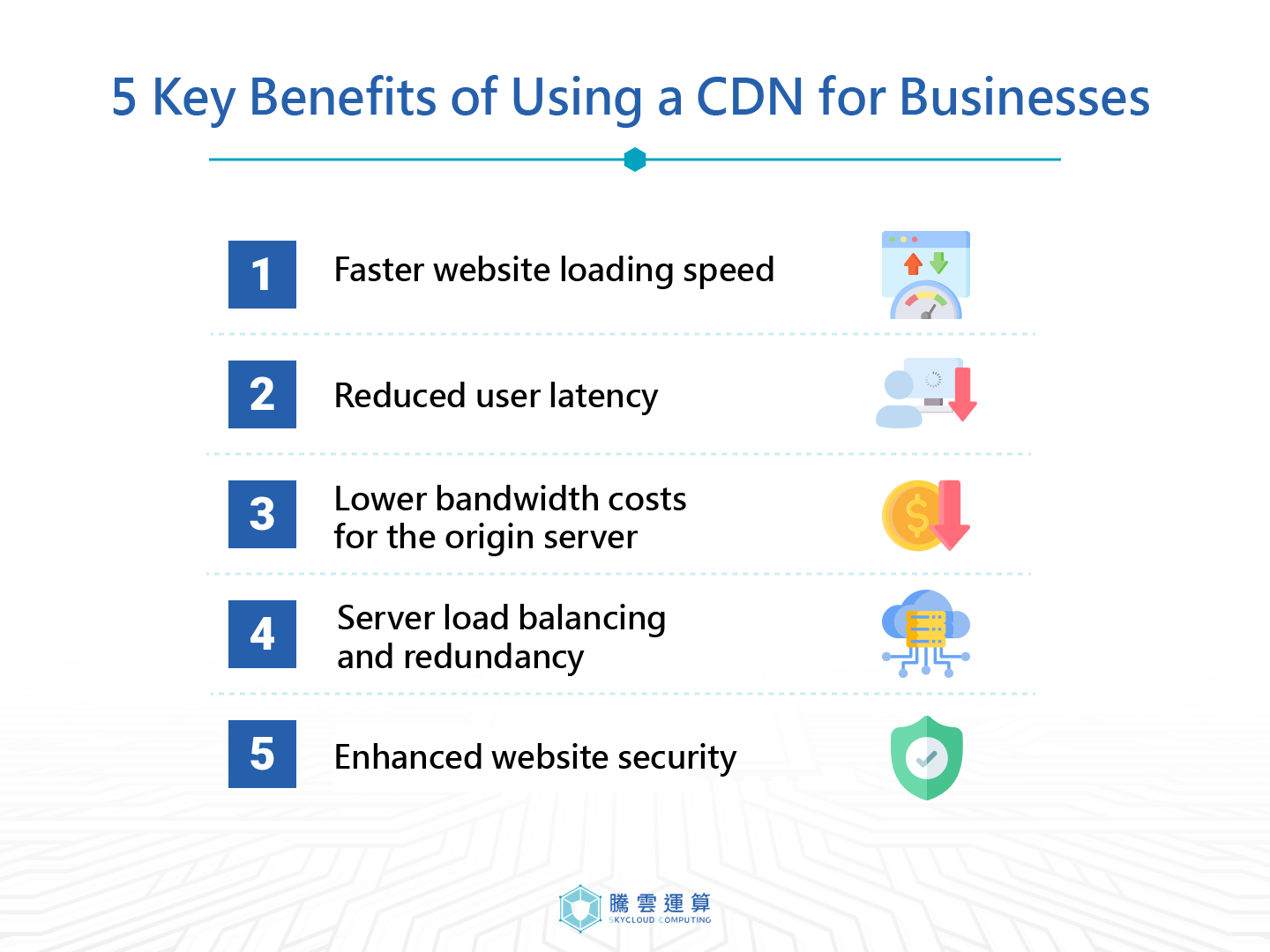
1. Faster Website Loading
CDNs deploy multiple nodes worldwide, allowing users to access content from the nearest server, reducing connection distance and speeding up load times.
Cached content at nodes ensures repeated requests are served directly without retrieving from the origin, further improving speed.
2. Lower User Latency
Latency is the time between a request and receiving a response. CDNs shorten the distance between users and content, reducing latency.
Advanced techniques such as multipath transport and traffic optimization further enhance delivery speed and reduce delays.
3. Reduce Origin Server Bandwidth Costs
Distributing users to multiple nodes reduces bandwidth demand on the origin server, lowering operational costs.
4. Load Balancing and Redundancy
If the origin server fails, traffic is distributed to other nodes, maintaining website availability and acting as backup servers.
5. Enhanced Security
CDNs mitigate DDoS attacks, protecting the origin server from downtime. Combined with SSL/TLS encryption, data remains secure in transit, preventing theft or tampering.
b) What Are the Drawbacks of a CDN?
1. Additional Costs
Deploying a CDN requires setup fees. Nodes are often billed by traffic; more visitors or data increases costs.
For low-traffic sites, paying only for the origin server may be cheaper than a CDN setup.
2. Complexity of Setup and Management
CDN configuration requires technical knowledge. Misconfigurations can cause downtime or inefficiency.
3. Data Privacy and Storage Regulations
Distributing data globally must comply with local laws (e.g., China’s Cybersecurity Law) regarding storage and cross-border data transfer. Businesses must ensure CDN providers follow regulations to avoid legal risks.
Choose a professional CDN provider like SkyCloud to design the best deployment plan and monitor your network for optimal performance!
4. Case Studies: How Companies Optimize User Experience with a CDN
a) PChome: Using CDN to Improve Website Load Speed
PChome, a leading e-commerce platform in Taiwan, faced performance issues during high-traffic periods. By deploying a CDN, static content like images and videos were cached across multiple nodes, significantly reducing page load times and improving user experience.
This allowed PChome to maintain fast response times even during promotional events with peak traffic, preventing potential revenue loss from slow loading pages.
b) Dcard: Deploying CDN to Enhance Overseas User Access
Dcard, a popular social platform, has users not only in Taiwan but also abroad. By utilizing a CDN, Dcard ensured that overseas users could access content quickly, improving engagement and retention.
The CDN minimized latency by directing users to the nearest node, ensuring smooth browsing even under heavy international traffic.
c) Far Eastern SOGO: Maintaining App Stability During Peak Seasons Using CDN
During shopping festivals or holiday seasons, Far Eastern SOGO’s app experienced surges in traffic. Deploying a CDN distributed server load, preventing downtime and ensuring the app remained stable for thousands of concurrent users.
This strategic use of a CDN not only maintained service reliability but also enhanced customer satisfaction during critical sales periods.
5. SkyCloud: Your Top Choice for CDN with Global Nodes and Intelligent Scheduling
SkyCloud offers a professional CDN solution with nodes distributed worldwide, intelligent scheduling, real-time traffic monitoring, and advanced security features. We help businesses ensure fast, reliable, and secure access to content for all users, no matter where they are.
Whether you need to optimize website speed, protect against DDoS attacks, or provide consistent service during peak traffic, SkyCloud’s CDN solution provides a turnkey solution tailored to your needs.
Ready to accelerate your website and protect your users? Contact SkyCloud for a professional CDN deployment plan!
'/%3e%3cdefs%3e%3clinearGradient%20id='paint0_linear_372_3728'%20x1='19.2966'%20y1='17.8555'%20x2='4.40396'%20y2='14.991'%20gradientUnits='userSpaceOnUse'%3e%3cstop%20stop-color='%2336BCD4'/%3e%3cstop%20offset='1'%20stop-color='%2362E0B9'/%3e%3c/linearGradient%3e%3c/defs%3e%3c/svg%3e) Experience fast, secure, and reliable service.
Experience fast, secure, and reliable service.


'/%3e%3cpath%20d='M38.0476%2033.4361C38.563%2033.9451%2039.3985%2033.9451%2039.914%2033.4361C40.4294%2032.927%2040.4294%2032.1018%2039.914%2031.5927L28.4218%2020.2421L16.9296%2031.5927C16.4141%2032.1018%2016.4141%2032.927%2016.9296%2033.4361C17.445%2033.9451%2018.2805%2033.9451%2018.7959%2033.4361L28.4218%2023.9289L38.0476%2033.4361Z'%20fill='%23222222'/%3e%3cdefs%3e%3clinearGradient%20id='paint0_linear_1305_5534'%20x1='53.5'%20y1='53.5'%20x2='-6.00852'%20y2='43.6145'%20gradientUnits='userSpaceOnUse'%3e%3cstop%20stop-color='%2336BCD4'/%3e%3cstop%20offset='1'%20stop-color='%2362E0B9'/%3e%3c/linearGradient%3e%3c/defs%3e%3c/svg%3e)